Goal
Develop a proof of concept for a native mobile application of an e-commerce technology company. The goal is to offer users a convenient catalog of technology products with an intuitive navigation and effective categorization, implementing a streamlined product discovery and checkout process that increases LTV and reduces churn rates.
User Research
I conducted secondary research to find the type of users I wanted to learn more about. The users are mainly Generation Z and Millennial tech savvy people in suburban areas with a need for convenient tech product applications that deliver to their homes.
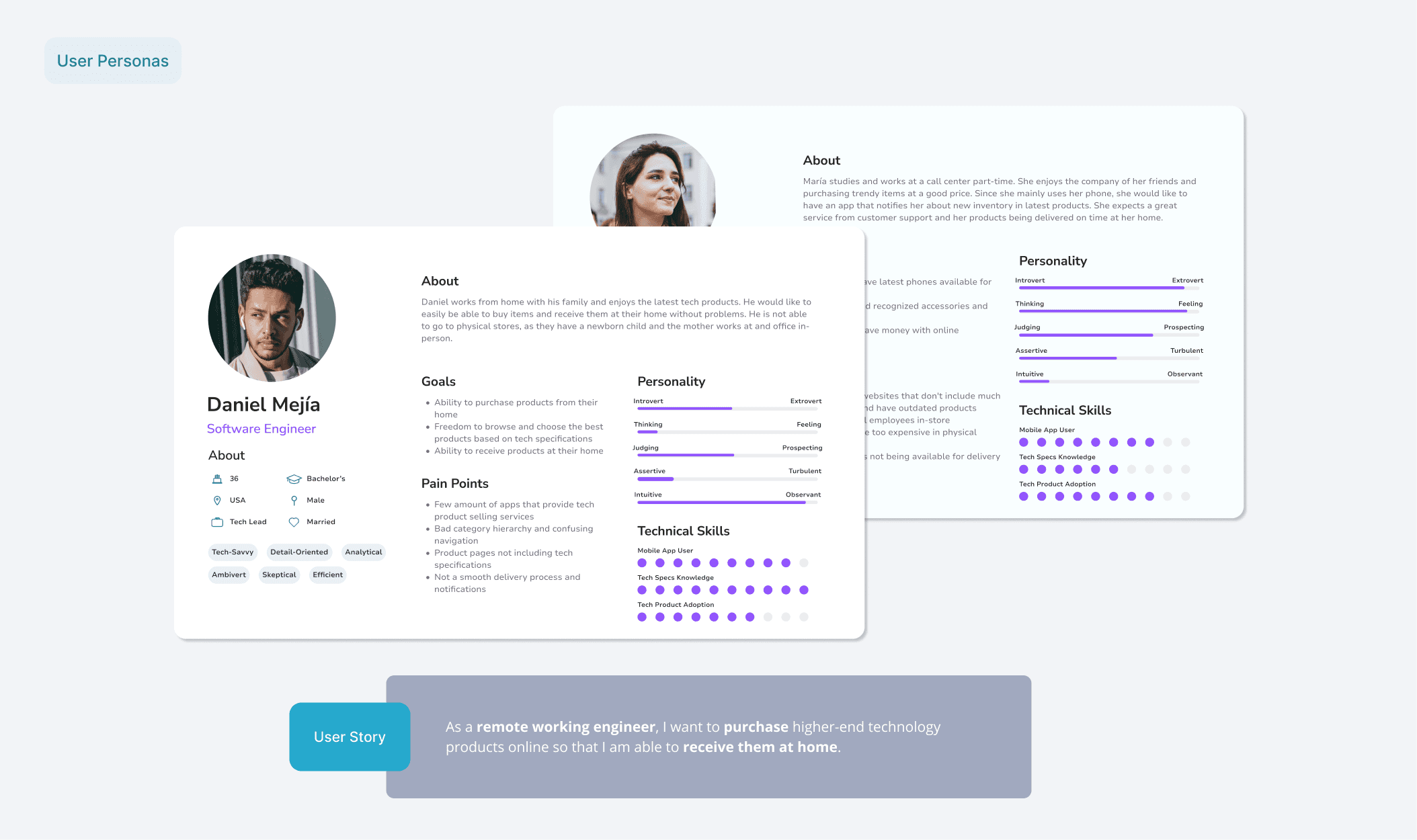
The user personas which informed the app ideation process defining ther goals and pain points, as well as their personality and traits.
Pain Points
Logistics & Services
• A lack of online tech stores with outdated inventory and few tech specifications detailed. • Complicated tech support contact and delivery status updates.
In-App Functionalities
• Confusing navigation with bad categorization, hierarchies, and search functions. • Bad payment experience of journey towards checkout and limited payment options.
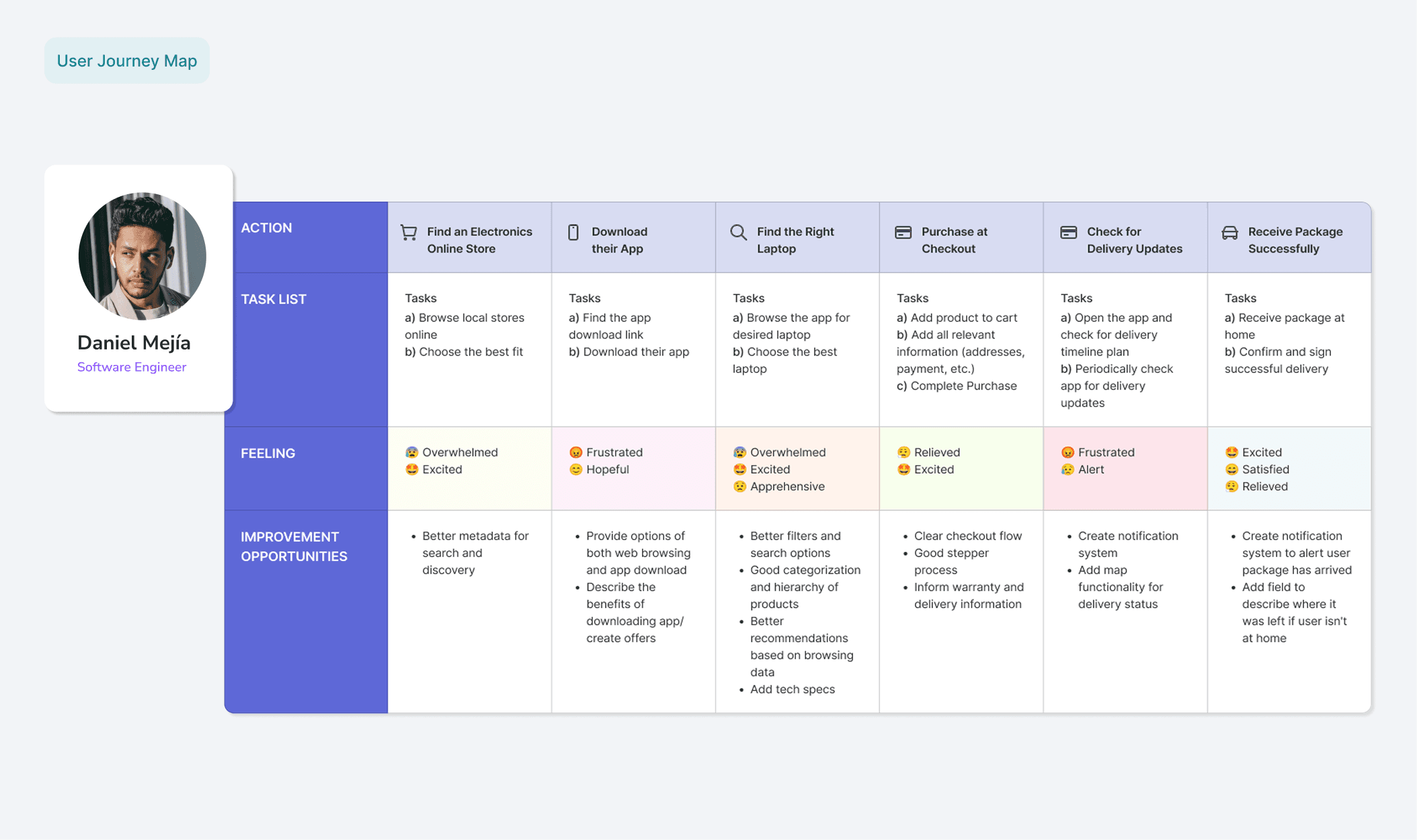
The user should have a delightful journey towards their end goal. To achieve that, I strived to consider and improve their pain points with better product discovery, checkout, and delivery processes.
Problem Statement
Tech-savvy users who work remotely need to receive high-quality tech products at home because of their busy schedule.
Ideation
The process continued with a competitive audit I conducted of 7 tech e-commerce applications examining their app browsing experiences categorized by first impressions, interaction, visual design, and content. These categories included the apps' product offering, value proposition, target audience, user flow, features, navigation, accessibility, among other characteristics. Grouping insights by themes through an affinity diagram revealed informative insights.
Building upon those insights, I developed a happy path user flow to define the preliminary information architecture ideation. With the structure established, I conceptualized wireframes in Figma of the main screens in the user flow.

A main user flow exploration for the POC of the application.

The information architecture which illustrates the menu items in the navigation drawer, navigation bar, and application bar throughout the app.
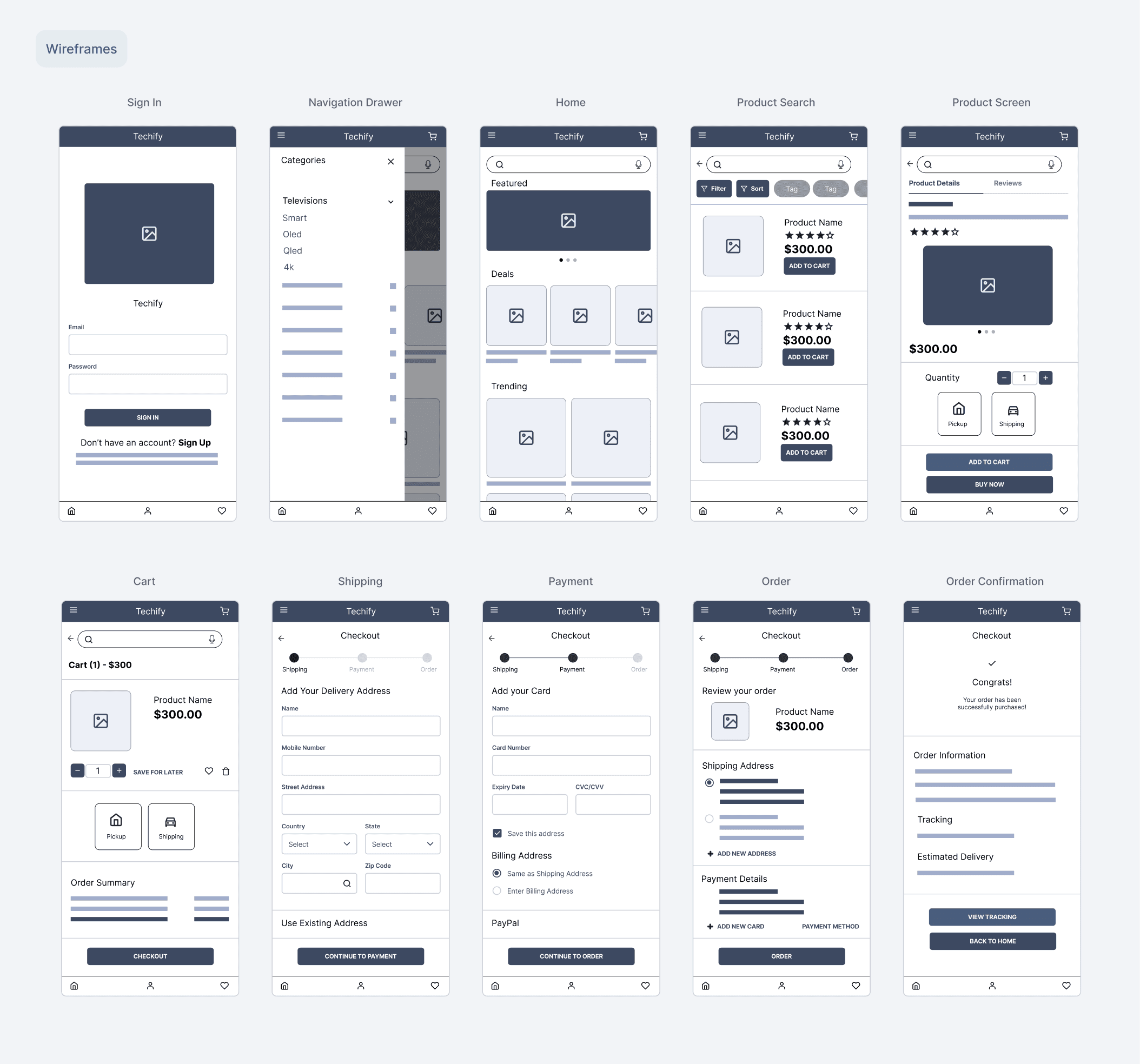
After sketching first versions of wireframes in paper, I digitized them in Figma with more clear Gestalt principles and design heuristics.
Prototypes
With wireframes and subsequent low-fidelity prototypes in place, I proceeded to streamline them as high-fidelity prototypes implementing a custom design system. Various changes had to be enacted, as native app functionalities and gestures differ from web applications — insights which were revelealed during iterative testing.
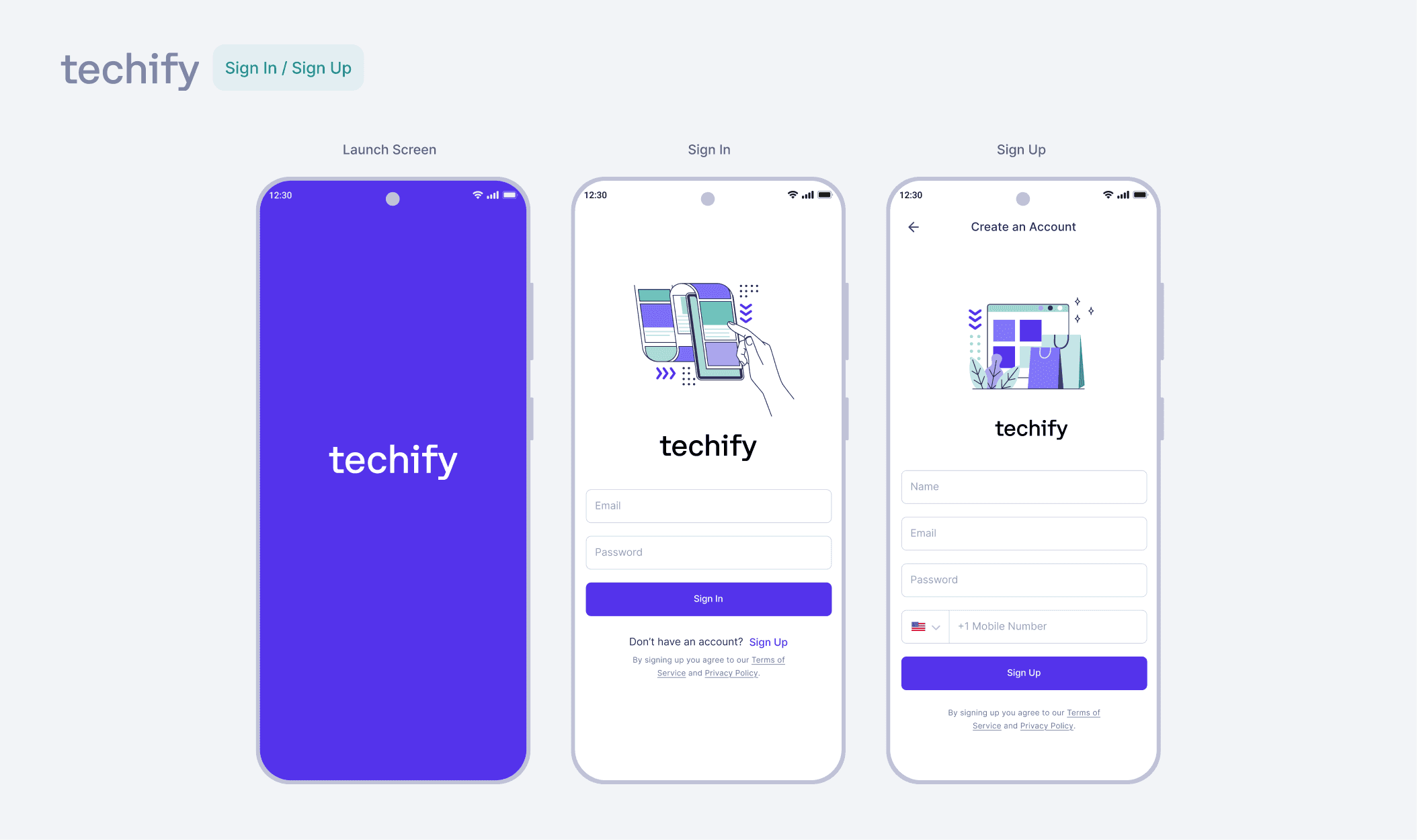
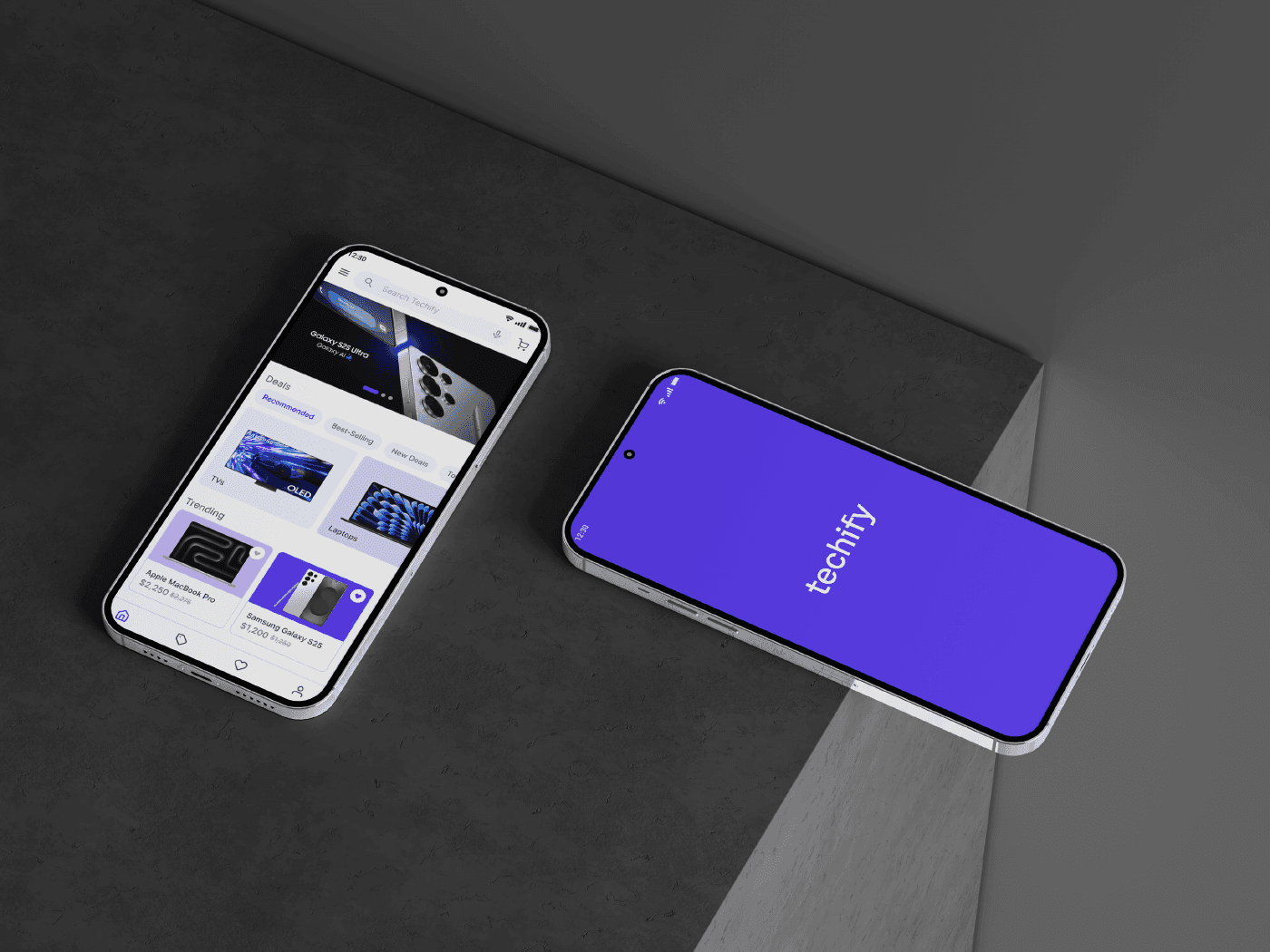
The Launch and Sign In/Sign Up screens which contain their labels as placeholder in their input components, a modern stylization for native apps. The button differs from the wireframes and is taller in size, as a good UX practice is to have a minimum of 44px height to allow a digit to be able to tap it.
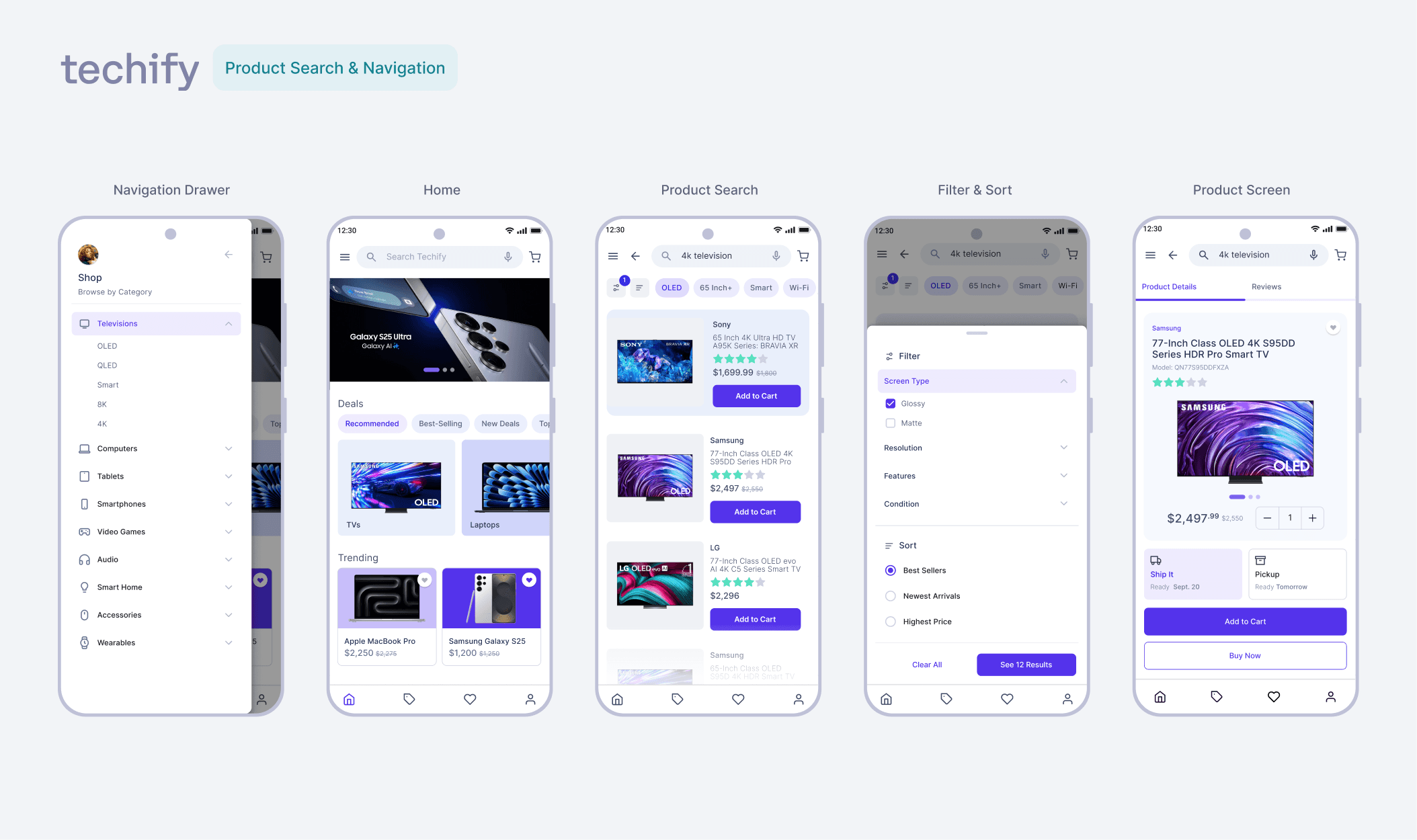
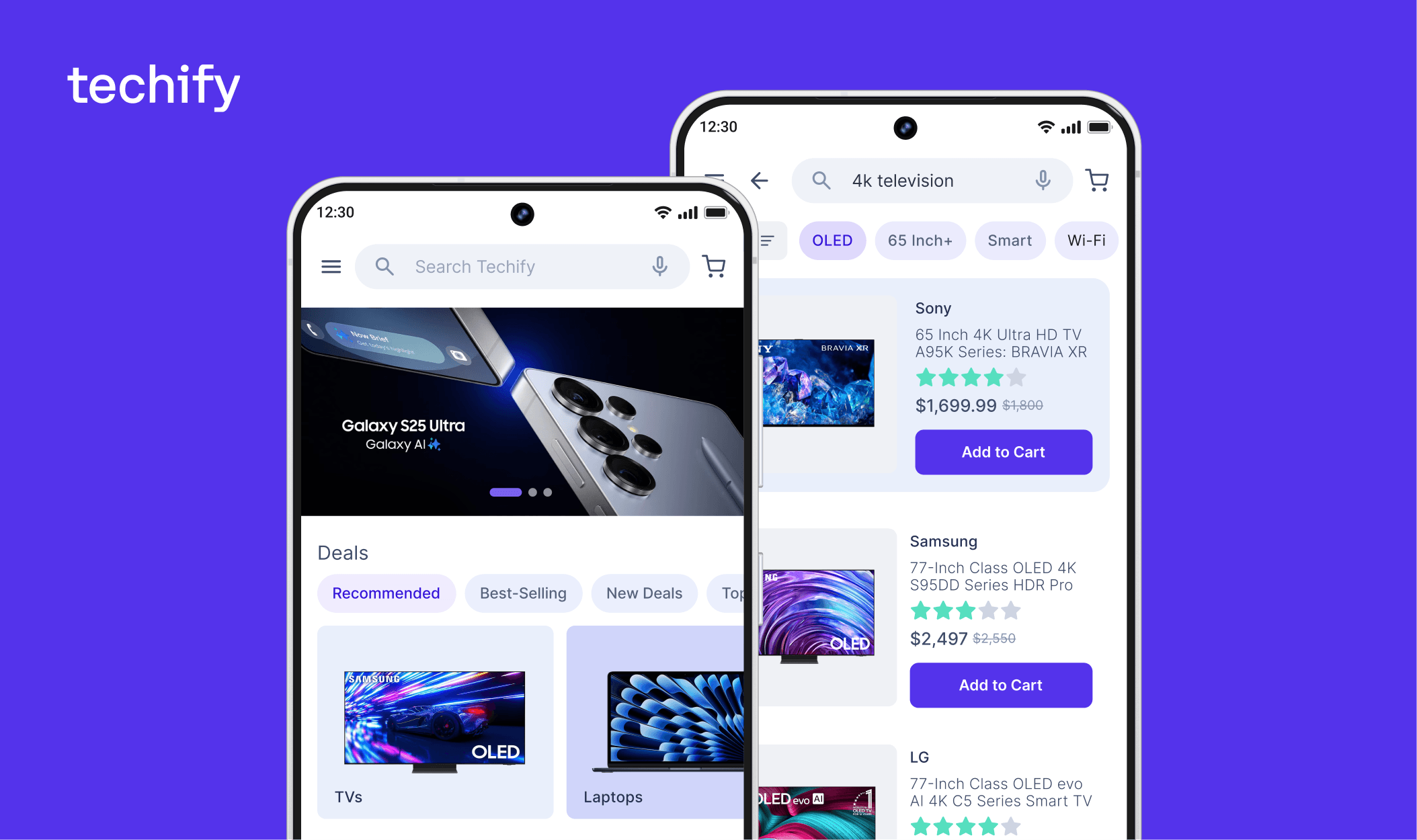
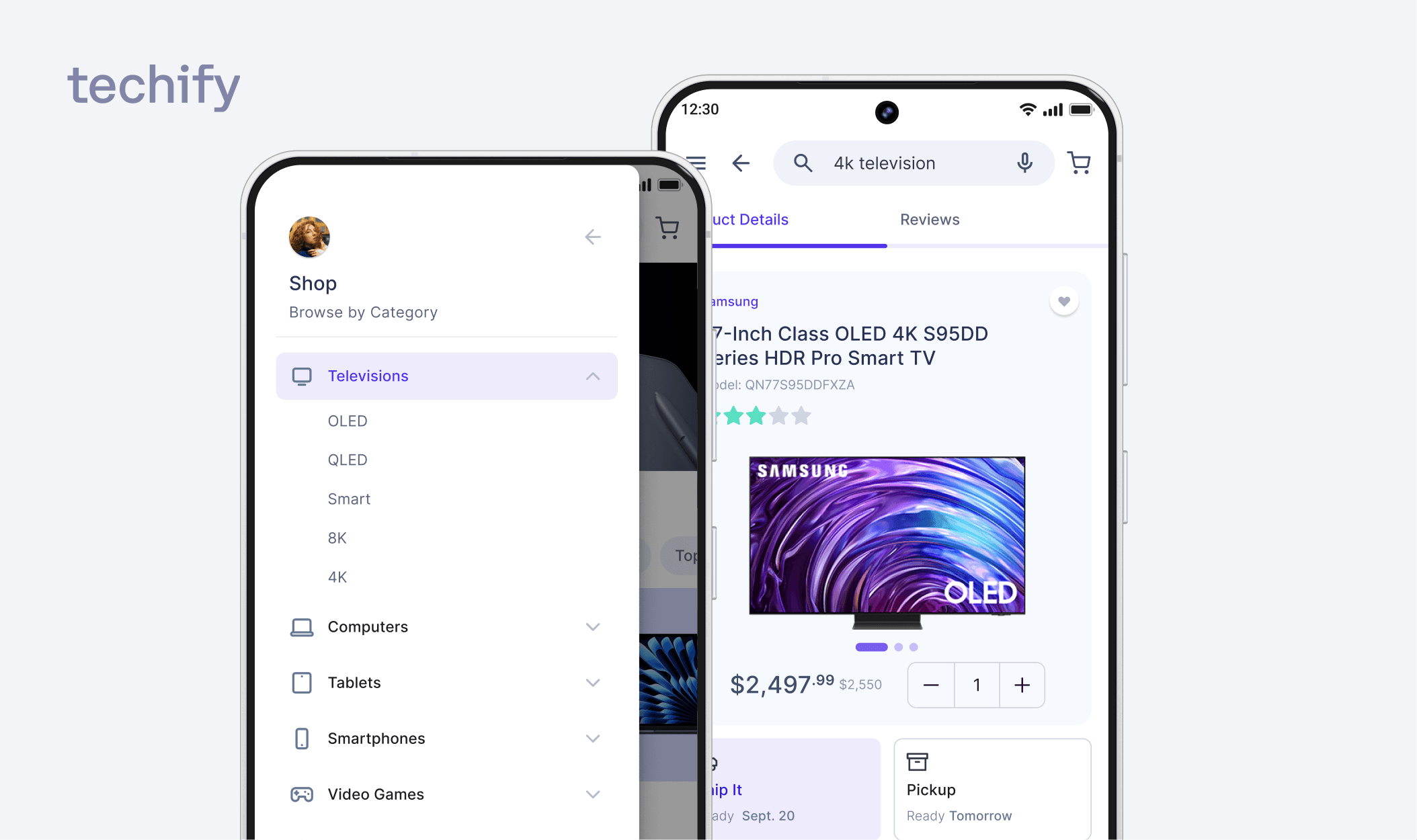
First version of the core navigation, including the Home, Product Search, and Product screens, as well as a navigation drawer with product menu items and filter and sort functionalities to aid in the product search.
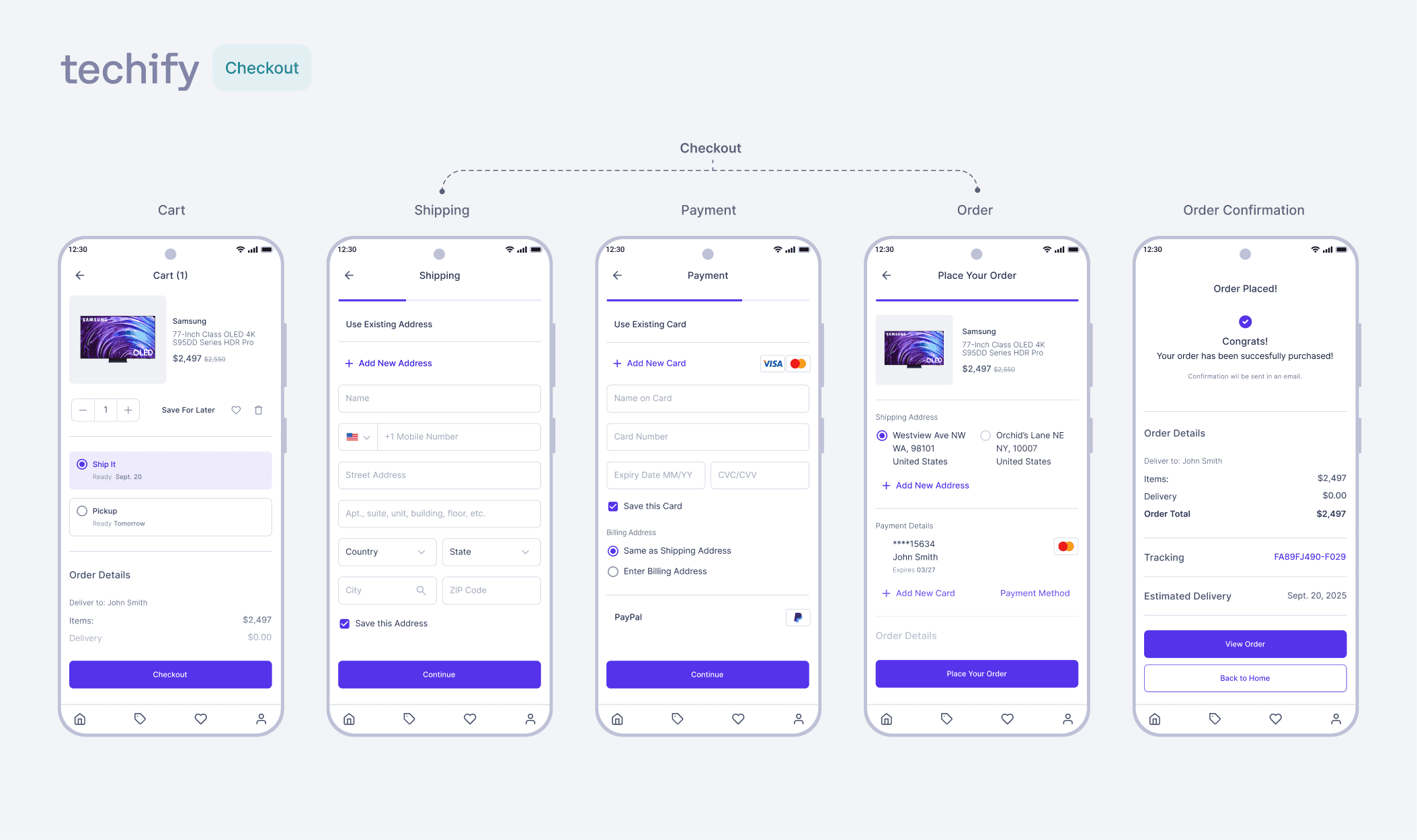
The checkout process had to be intuitive, and based on my studies of various competitor app user flows, native apps break the process into steppers instead of one scrollable page. The user knows exactly which part of the process they are in, and with side swipe gestures or the press of a button, they can continue their journey.
Results
Finalized a modern e-commerce native application product design end-to-end utilizing the Design Thinking methodology in conjuction with design heuristic standards and UX best practices. The development ready high-fidelity prototypes place the user at its forefront with intuitive navigation and an effective user experience which increases conversion rates and revenue, as well as cements customer lifetime value and retention.
User-Centered Design
With an end-to-end approach and early user and competitive research, the app is built upon meaningful insights which successfully impact business goals.
Design Heuristics & Patterns
Created patterns and established a design system which creates a future-proof foundation for new growth opportunities.
Streamlined Processes
With a clear, simple, and modern checkout stepper process, cart abandoment rates are reduced.