Solving Complex System Design of AI CMS Platform
Content Management Application
UX Design
UI Design
Role
Lead UX/UI Designer
Year
2025
Team
Design Product Engineering
Responsibilities
Wireframes Lo-Fi & Hi-Fi Prototypes Developer Hand-Off Stakeholder Alignment Documentation
Challenge
Co-design an MVP with Ubisoft, an AAA Studio, of an AI self-publishing application within an overarching platform. The software is an intelligent system focused on driving engagement by bringing intellectual property, such as characters, to life across social media.
User Research
During the Empathize and Define phases of the Design Thinking methodology, we identified personas and user stories based on interviews with users from partnered studios, highlighting their needs and pain points. Studios need an innovative way to connect with their game's community and utilizing IP characters the audience is familiar with alongside social media automation would cover that gap in the market.
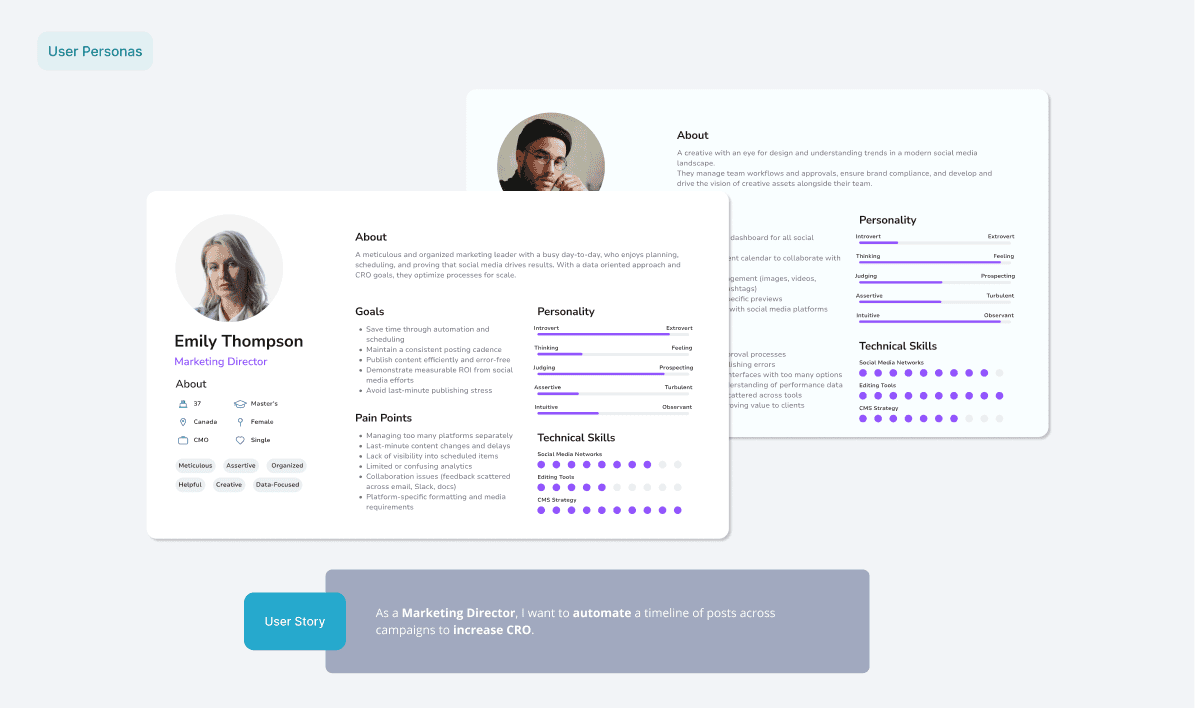
The user personas and stories are based on interviews from existing users of the company's products.
Problem Statement
Game studios need to create compelling content that resonates across diverse online spaces, because consistently capturing and maintaining audience attention outside of gameplay can be a significant challenge.
Ideation
During the Ideate phase I contributed with competitive audits and a matrix highlighting features of similar existing products. Alongside various stakeholders, I brainstormed UX flows in a collaborative environment.
The goal was to automate the creation of engaging character-driven content where the system operates on an intuitive loop, constantly learning and adapting. Characters were to have unique traits and a personality enriched by provided data.
The feasible requirements from the BRD for the POC were a happy path with main user flows such as sign up, onboarding, character settings, main hub (content calendar), and a social media post management feed.
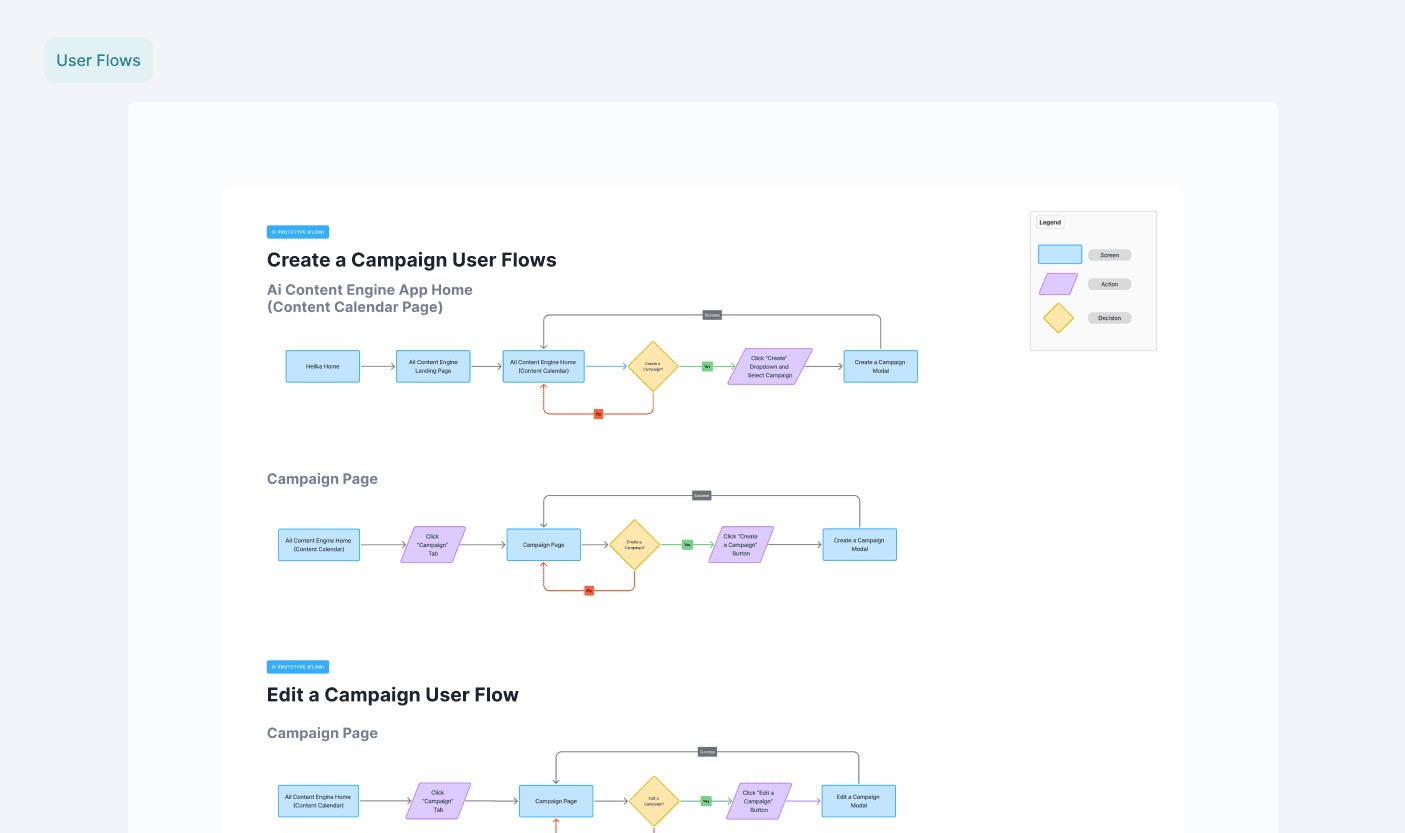
An early campaign creation flow exploration.
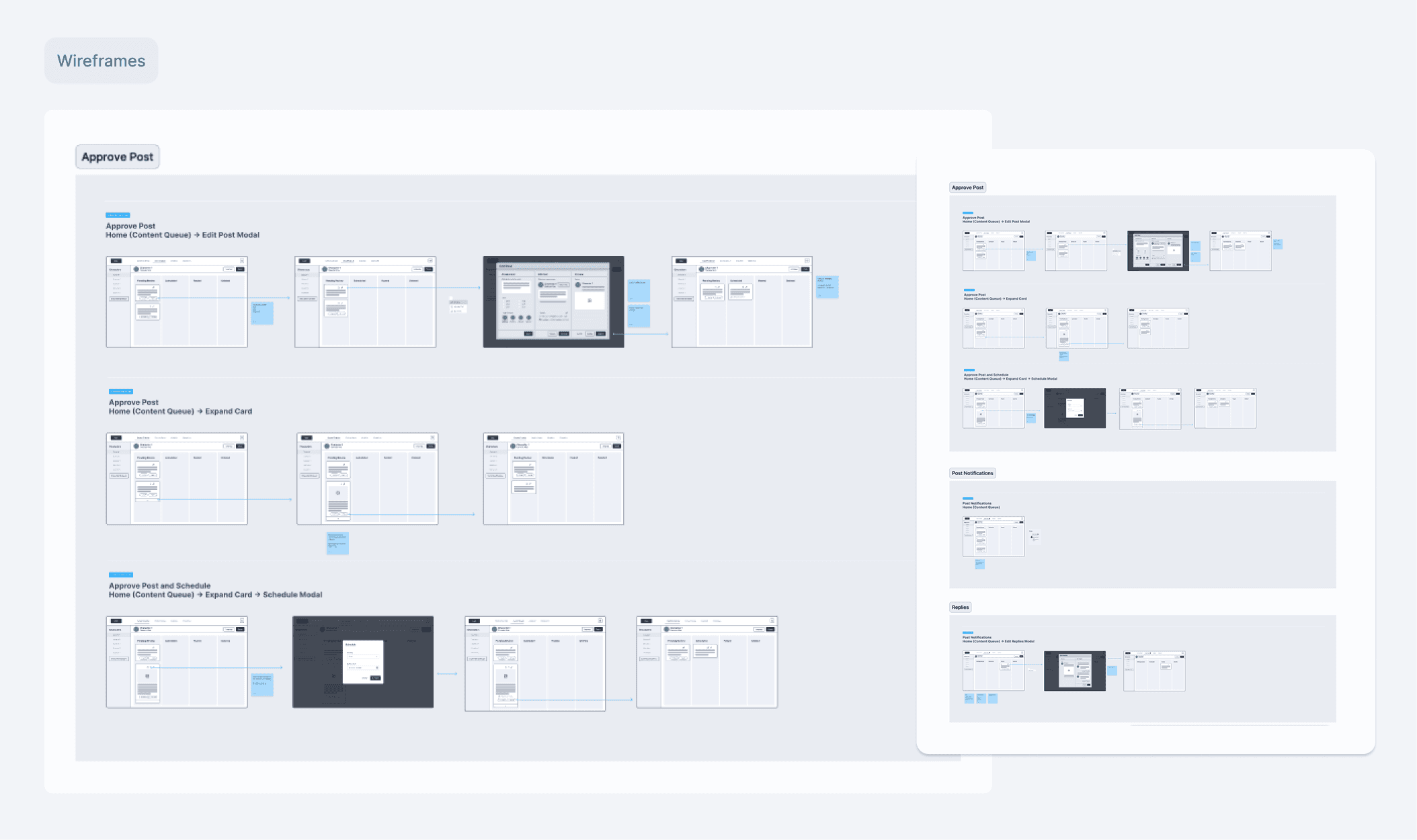
Wireframes of user flows for a social media post management feed.
Prototype & Development
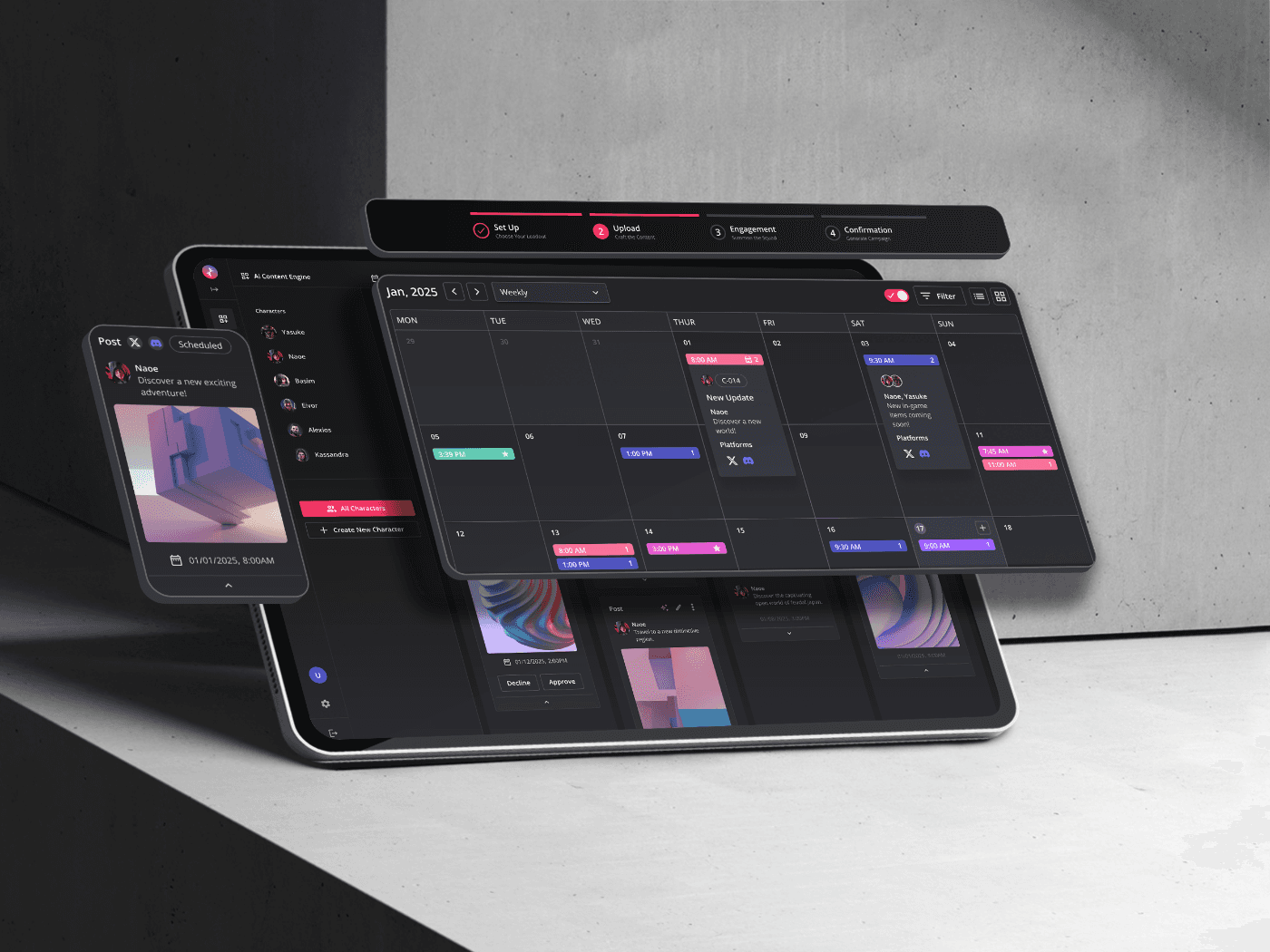
Through various rounds of feedback on the preliminary wireframes for the POC, I created the high-fidelity prototypes ready for engineering hand-off. They included responsive screens with the use of auto layout, as well as the implementation of existing design system components for faster development and consistency.
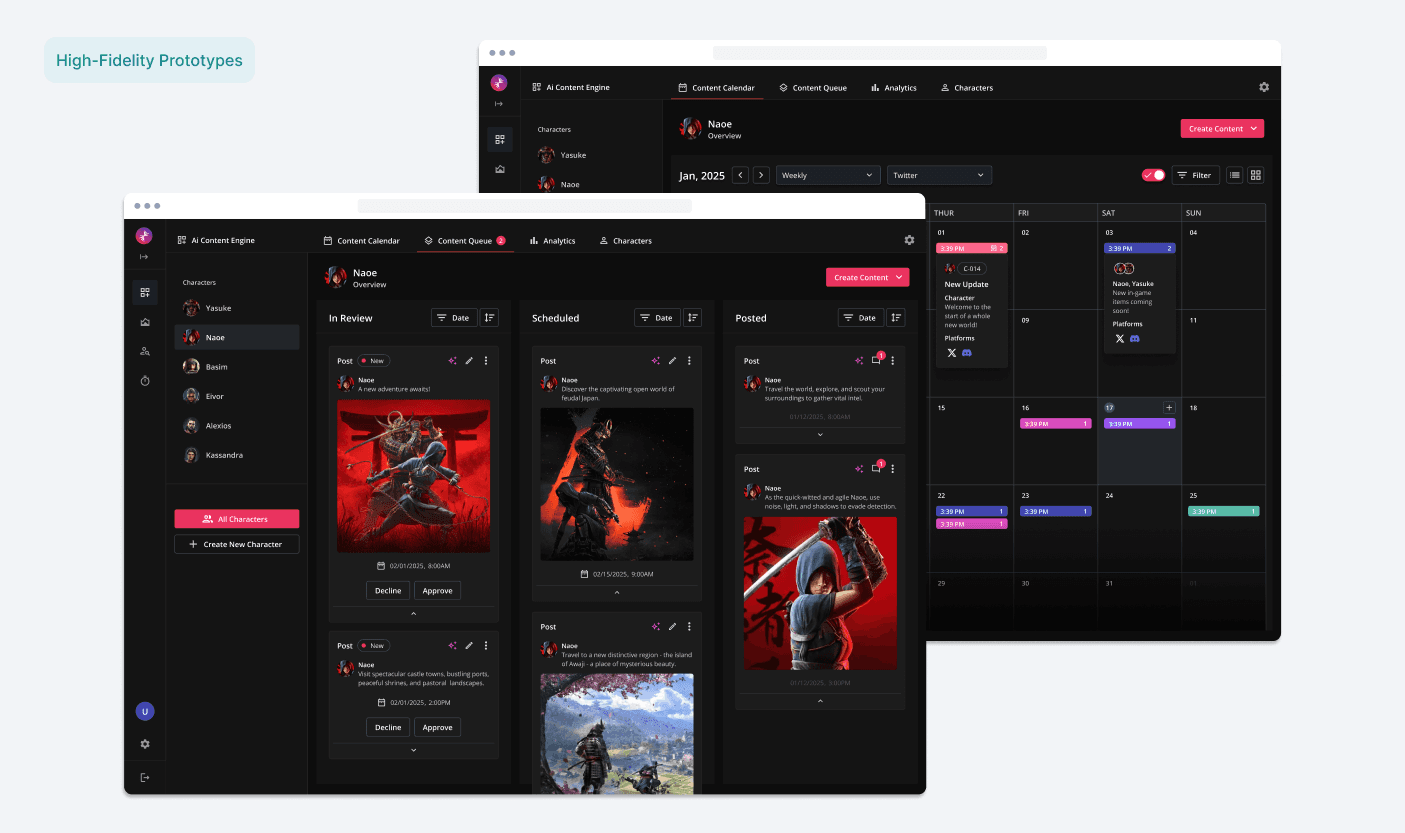
High-fidelity prototypes of the social media post feed and content calendar.
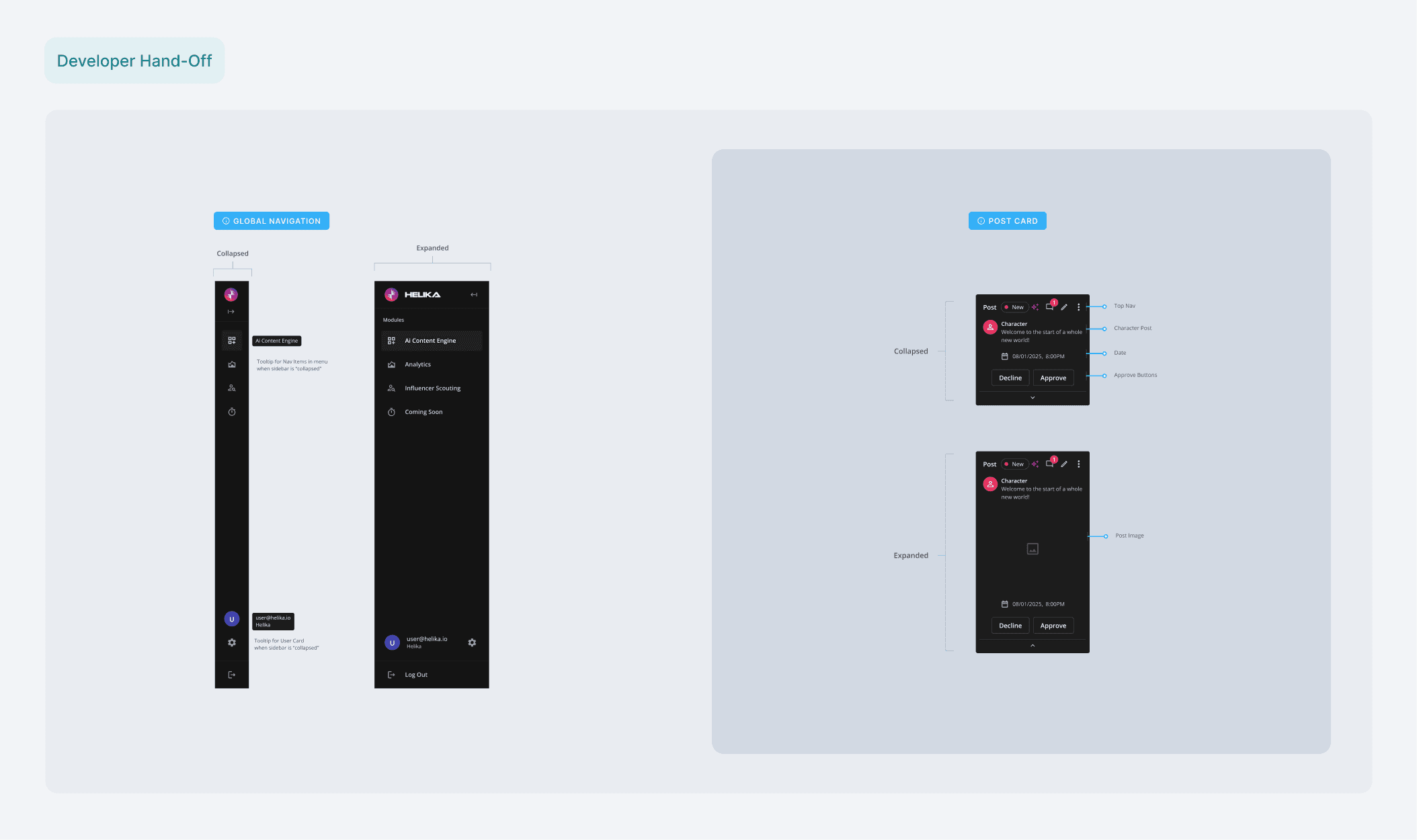
The Figma developer hand-off file included clear guidelines and documentation with annotations, as well as component properties set up. Any subatomic details of components (e.g. spacing, colors, fonts, etc.) where defined through values and tokens stored in variables from the design system.
Iterations and New Features
After testing the POC and receiving feedback from users, we brainstormed a new plan for the integration of multiple applications in a cohesive platform for the MVP. I created a Home screen hub that would host multiple modules — the AI Content Engine being one of them.
The modules' complexity kept increasing with the inclusion of different layered functionalities. IP characters were a fictional AI user separate from the real user who themselves could create multiple AI characters across multiple posts, social platforms, and campaigns.
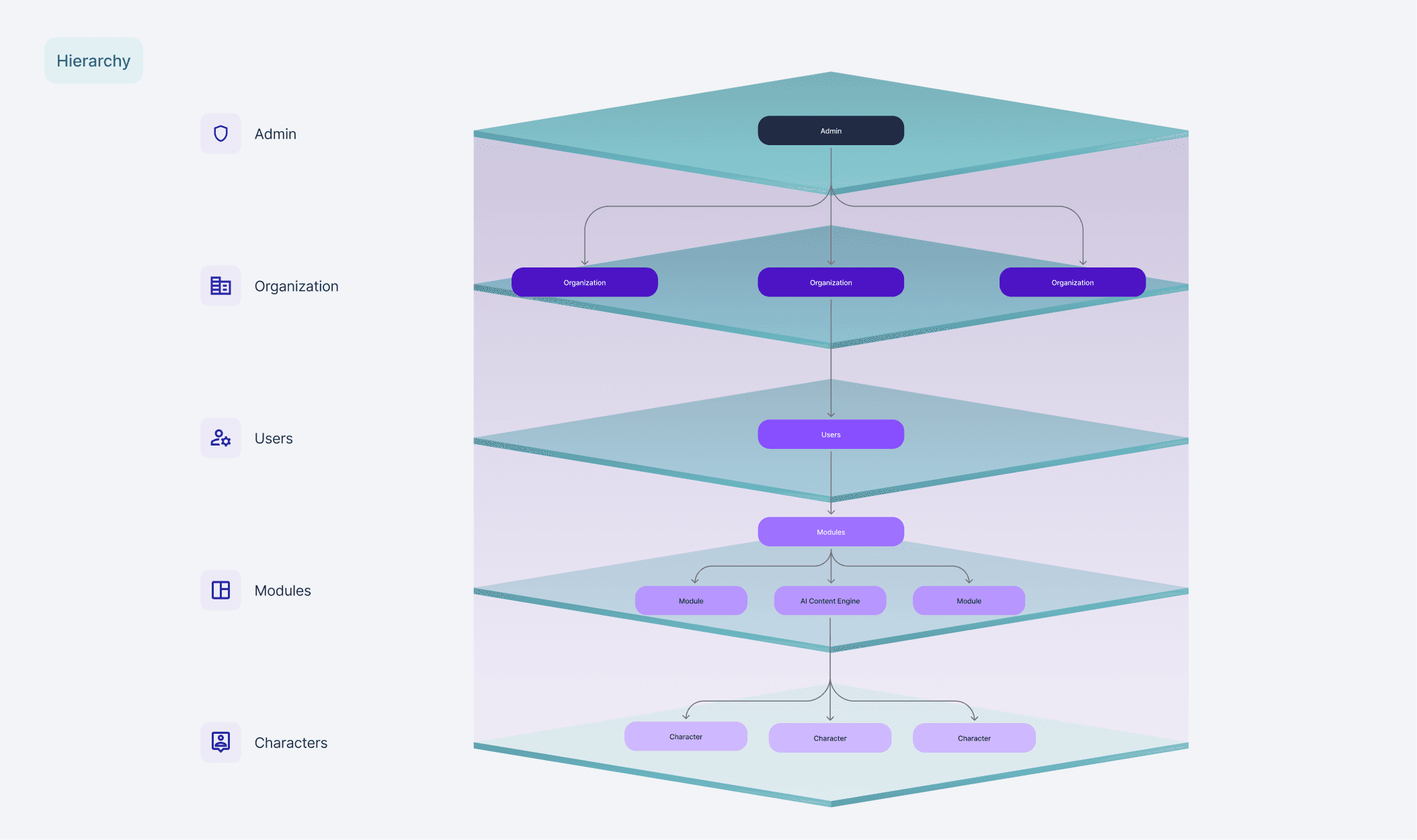
The system was built with a layered module access depending on the organization and their subscription plan, as well as individual user admin access and roles.
Taking into account the system hierarchy, I designed a new campaign creation flow, where users could create multiple social media posts through a scheduled campaign. Insights from user feedback regarding campaign creation revealed that users where overwhelmed with multiple settings in one page. I created a new version of the flow with a stepper and starter campaign templates that broke down the process into shorter and simpler steps for a more clear user experience.
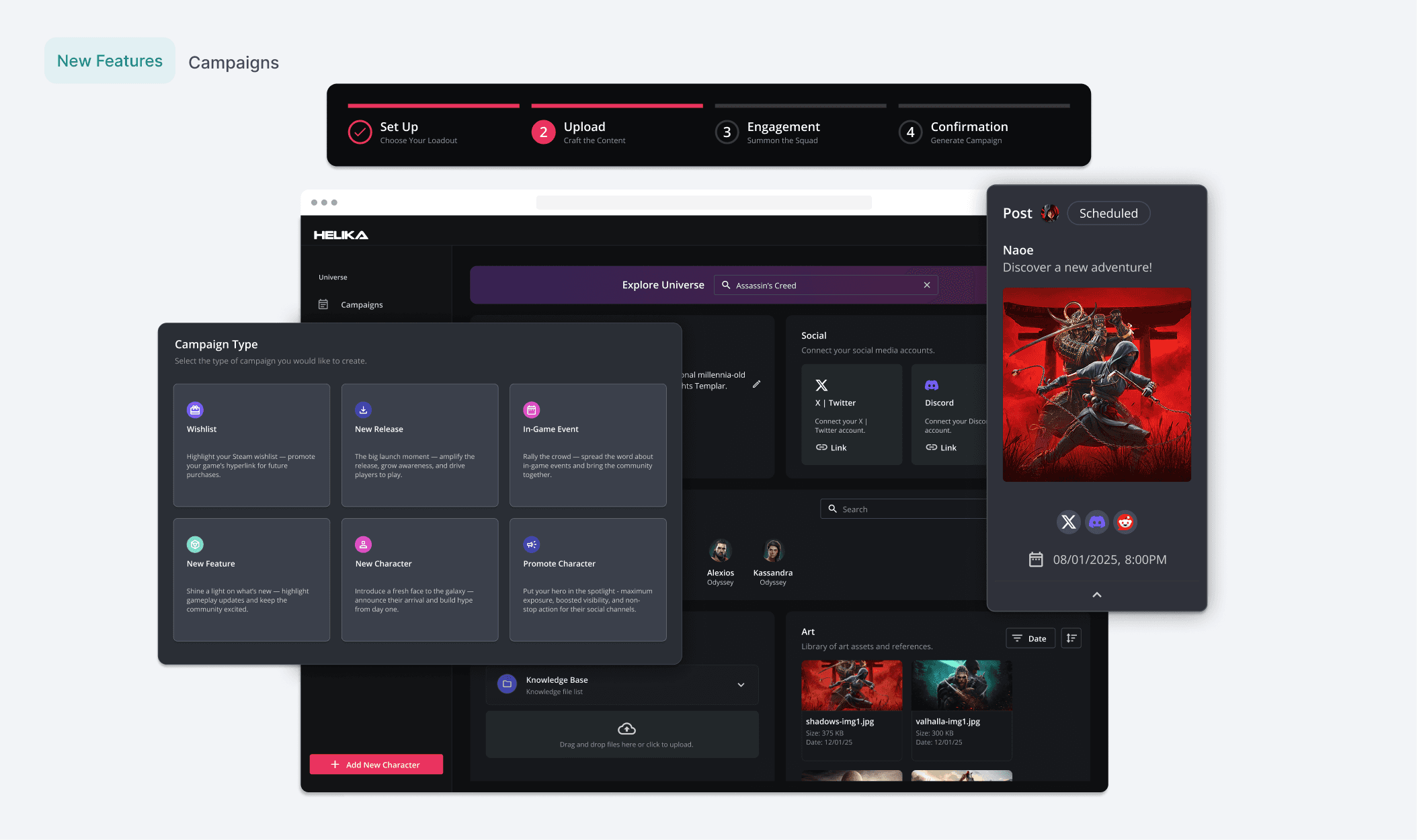
A new module hub for IP universe and campaign set up.
New features allowed for the creaton of patterns, where in different instances the user would use intuitive and familiar micro-interactions throughout the application, such as social media app integrations. The user flow and components of this new feature should allow for future platform updates after X integration (e.g. Discord).
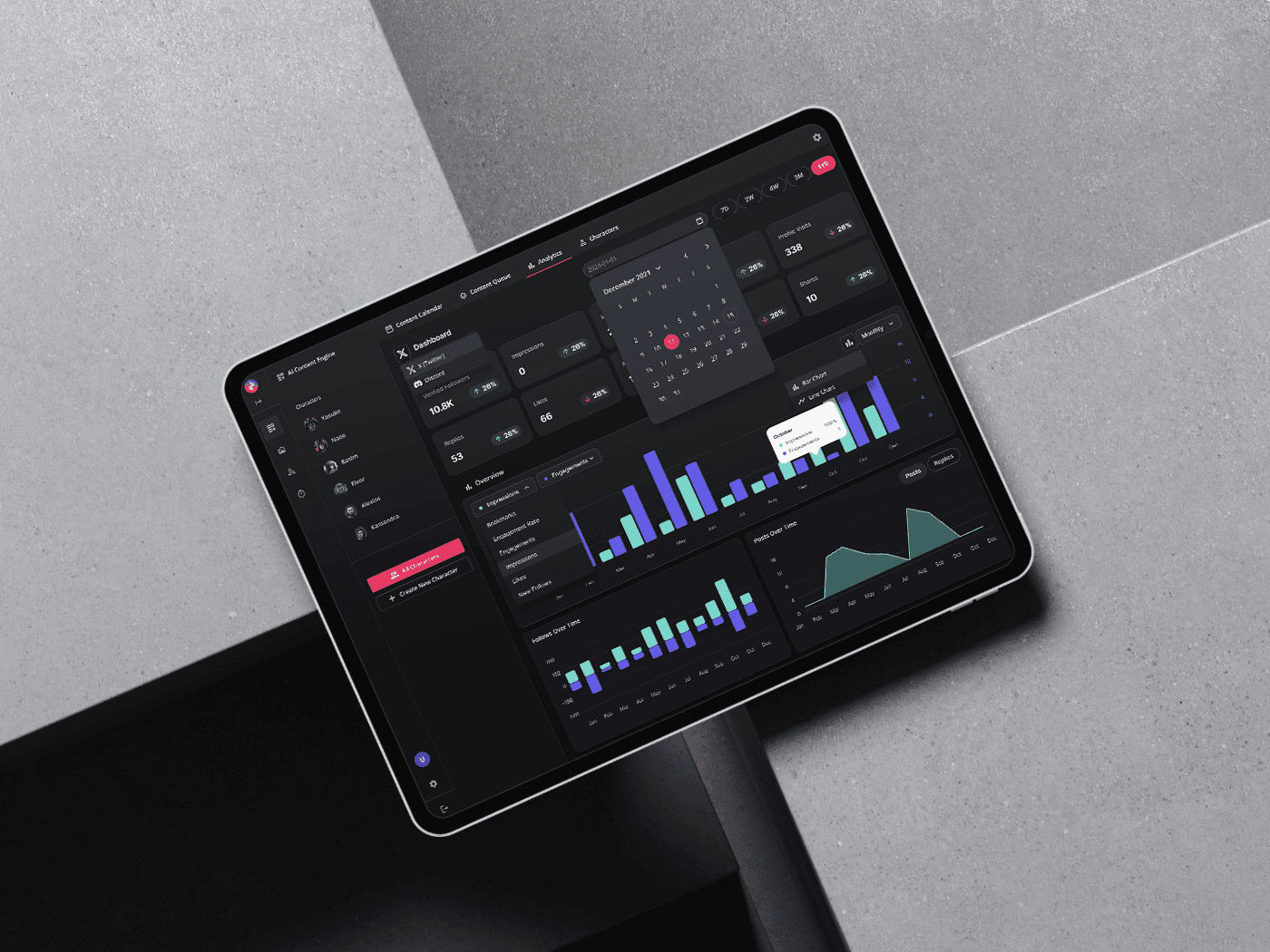
Following app integrations there was a user need to display analytics utilizing social media APIs. The analytics components and flow had to feel familiar with each platform while appearing homogenous in one dashboard. Following UI best practices for data visualization, I created a style guide with a focus on accessiblity.
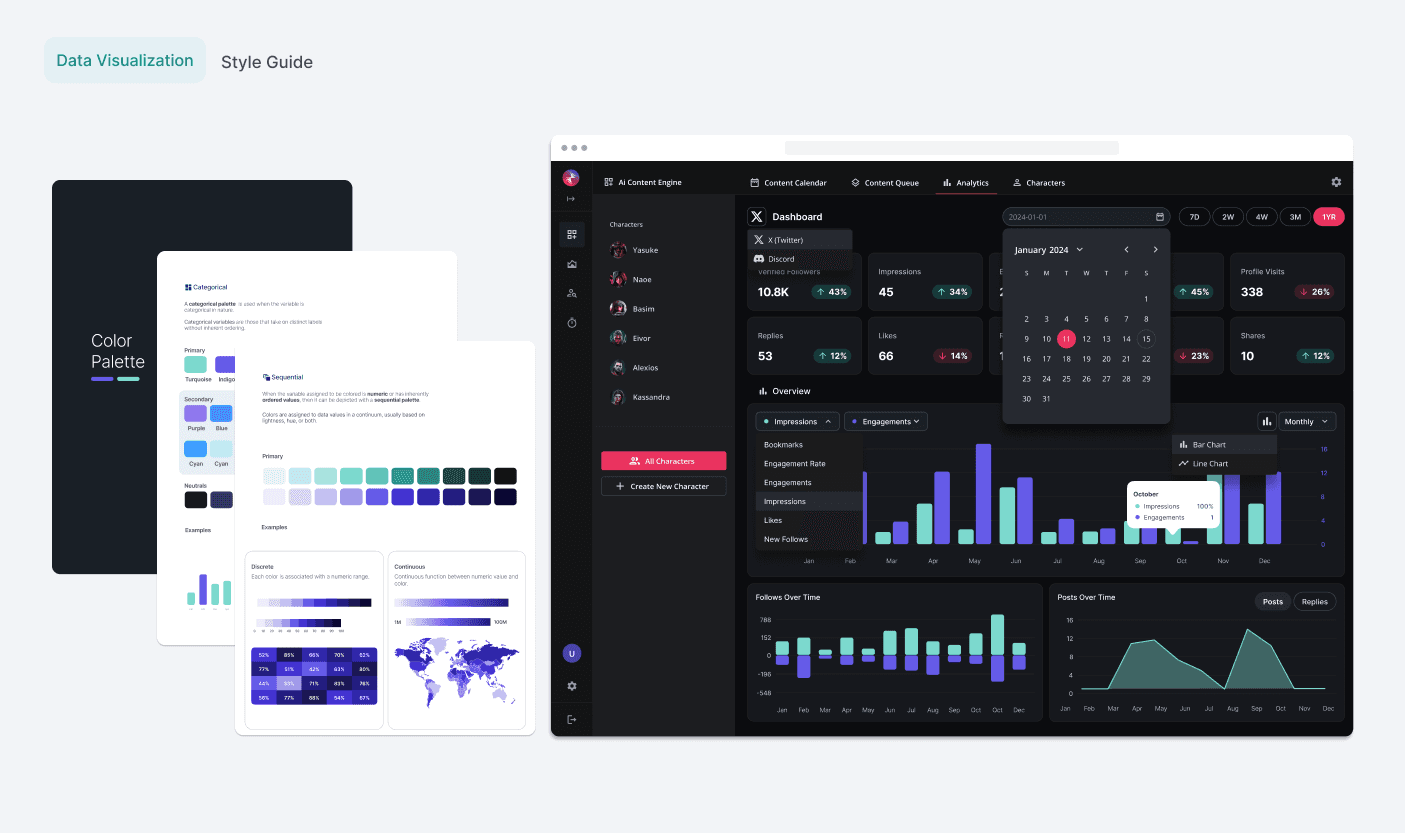
The style guide for data visualization which included categorical, sequential, and diverging color palettes and template guidelines for charts and graphs.
Results
Finalizing the goal of an MVP alongside Ubisoft, the team successfully launched a complex and innovative product with the implementation of interactive Ai characters across different UX flows in the application.
Studios Onboarded
Successfully onboarded studios to the new module, which helped with early user feedback and the continual improvement of the product.
Subscription Value
Provided more value for studios already onboarded in the company's ecosystem with new features, and in turn impacting positively the financial goals of the business.
UX Improvements
Created patterns that are utilized across apps in the overall platform, as well as improving the components in the design system for future products.
More Case Studies